Beyond the open call: What a curated innovation launchpad taught us about supporting innovation at the last mile
Last mile distributors are proven innovators, but good ideas do not replicate on their own. After two open Innovation Challenges, the Global Distributors Collective (GDC) pivoted to a different design, to make sure innovations spread within the last mile distribution (LMD) sector: curated innovations shared through a peer learning approach with a small, committed cohort of innovation ‘adopters’. Here is what worked, what we learned along the way, and what we would tell other technical assistance providers and donors interested in following a similar approach. The GDC Innovation Challenges, Innovation Launchpad and Innovation Trends projects are all developed and delivered by the GDC, with support from UK aid from the UK government via the Transforming Energy Access platform.
In 2022 we wrote about our key lessons from running Innovation Challenges for last mile distributors (LMDs). That article is the honest starting point for this one. So, what had we learnt? That genuinely replicable innovations are hard to find; that replication does not happen organically, no matter how novel or exciting the innovation and; that the application and decision-making process is where an innovation challenge either widens access or quietly narrows it – with existing funding and selection mechanisms still being largely biased against local- and women-founded companies (read more about this in our 2022 blog).
We were candid then, that, though our innovation replication toolkits and webinars were downloaded widely, they were rarely adopted deeply by other LMDs. We flagged two ideas we wanted to test next, in order to address some of the difficulties of our earlier innovation challenges: peer-to-peer mentoring for distributors keen to adopt the same innovation, and an inception phase to validate assumptions and align partners before they had to commit the time and financial resources to adopting said innovation. The GDC Innovation Launchpad, which ran two cohorts from mid-2024 into 2025, was our attempt to bring these ideas to life; with this reconceptualisation of our original innovation challenges looking quite different from what we first imagined.
From an open call to curated replication
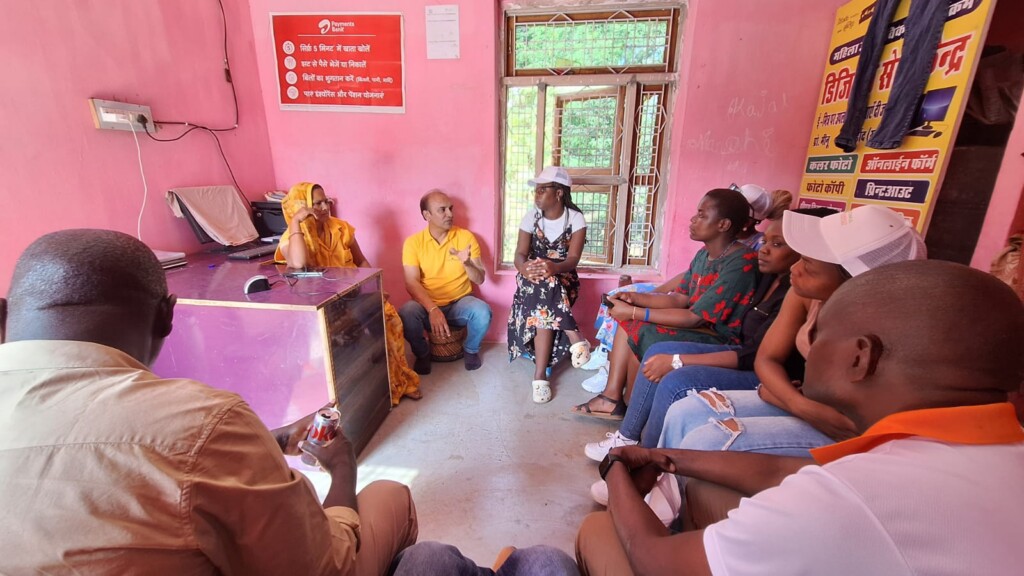
The biggest design change was at the front end. Rather than inviting LMDs to propose any new business idea they wanted to explore, we curated these for them. To do this, we talked with 17 thought leaders in the last mile distribution (LMD) sector and identified 12 emerging innovations that we believed we would likely see more of in the next five years. Out of these 12, and informed by a survey of our members, we selected the two innovations this article focuses on: repair services and e-commerce. For us to better understand the success factors for these innovations and to identify what we call ‘trailblazers’ that could be engaged in the programme (that is, forward-thinking, high-performing LMDs or service providers that have already tried and tested these innovations in their own companies), we published Innovation Spotlights on each: last-mile repair as an after-sales service, pioneered by SolarAid in Zambia, and e-commerce for the last mile, pioneered by Frontier Markets in India.
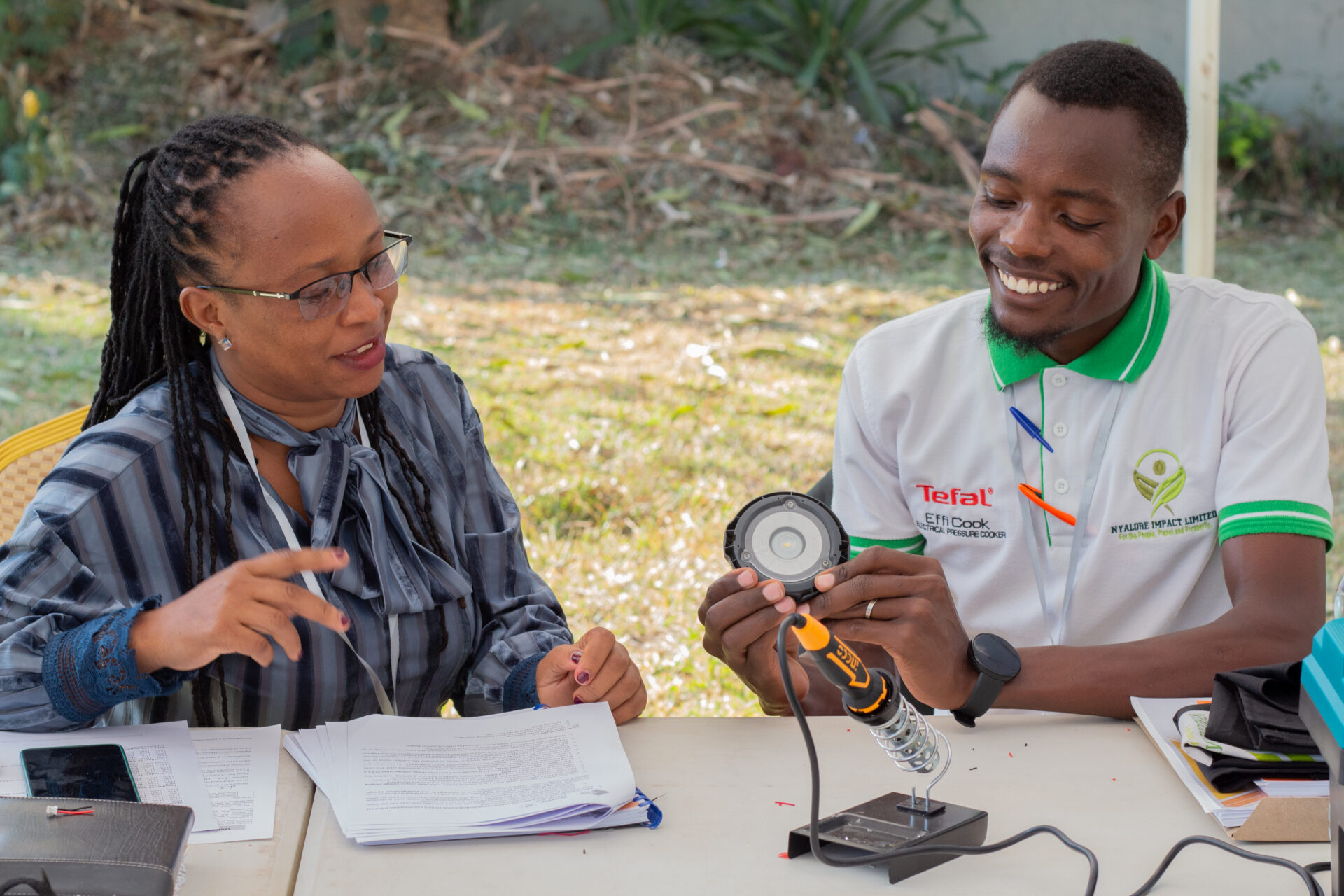
Applicants for the Innovation Launchpad had to have read the relevant spotlight to confirm they had the necessary preconditions in place, both for their business and for the market they operate in. Using a comprehensive set of selection criteria relating to e.g., the LMD’s motivation and commitment and their plans for long-term sustainability, we selected three applicants for each cohort and paired them with the original innovator, whom we called the trailblazer. Each cohort met its trailblazer in person, on the trailblazer’s own premises, then continued with monthly one-to-one check-ins and group peer-learning calls, for which the trailblazer received a small amount of funding from us – acknowledgement of the time and effort it takes to lead and coach such a peer learning group, a lesson we learnt from the original innovation challenges. Besides this coaching from the trailblazer, applicants also received a small grant from the GDC to help them adopt and pilot the innovation in their own business.
Selection mattered as much as design. Besides evaluating the motivation and readiness of the applicant to adopt the innovation, we kept the inclusion goals from our earlier challenges; looking for locally-led and women-led companies and rewarding reach into marginalised communities in how we scored impact as part of the application shortlisting and assessment. We continued to interview shortlisted applicants (as we did for our previous innovation challenges), because we’d found that it is hard to evaluate the innovation leadership of the applicant – something which can make or break the project – from their application form alone.
Frontier Markets ⁓ India
What the cohorts showed
The innovation diffusion logic of the Innovation Launchpad held up, with the proactiveness and willingness of trailblazer companies to ‘go above and beyond’ being key. In the repair cohort, all three adopters reported that adoption was smooth, crediting this to SolarAid’s (their trailblazer) hands-on training approach, tools, and the standard operating procedures that SolarAid made available to them; as well as their willingness to act as a go-between with manufacturers to collectively purchase spare parts at competitive prices. Likewise, in the e-commerce cohort, our trailblazer, Frontier Markets, went beyond just providing advice to the cohort participants to introduce them to its own digital service providers.
Adopters in each cohort told us that joining the programme with others reduced their sense of isolation and exchanging first-hand experiences about the innovation and the realities, challenges, and opportunities of adopting it in a new context or market helped to reduce the ‘first-mover disadvantage’: a known phenomenon which suggests that the first company to test a new product or innovation often experiences a competitive drawback and financial and/or operational losses. This shows that, when several companies adopt the same model across different countries and business contexts, they – and we all – can learn far more about whether it truly scales than if just one company adopts it in isolation.
Though not all of the innovation adopters reached their pilot target – for example, in the repair cohort some fell short of their repair volume targets – the most important outcome is that from the six companies that participated across the repair and e-commerce cohorts of our Innovation Launchpad, five successfully adopted the innovation in their own business and are still continuing six months after our collaboration with them. These are far better results than we saw in our original innovation challenges model.
Two recommendations for TA providers and donors
We close with the two lessons we would like others to take from this if they are also looking for ways to maximise the outcomes of their innovation support programmes.
First, curate the ideas rather than running a completely open call. While this might feel counterintuitive in an innovation-centred programme, starting with a shortlist of proven, replicable models lowers the risk that you fund something that cannot work, while also improving selection quality, because applicants are responding to a concrete opportunity that you already understand well and have already identified a suitable ‘trailblazer’ in. It also lets several companies adopt the same model at once, which creates economies of scale for the support you provide and a richer evidence base about whether and how the innovation diffuses well across contexts and geographies. This echoes what others are finding: for example, the Challenge Fund for Youth Employment’s learning on technical assistance shows that diagnostic-led, customised support is adopted far more readily than generic, portfolio-wide offerings, and that peer exchange adds value beyond one-to-one coaching.
Second, treat the trailblazer as the heart of the model, and invest in their capacity to mentor. The quality of the innovation matters, but the quality of the person or team teaching it matters just as much. SolarAid and Frontier Markets did not just demonstrate a model to their respective cohort of ‘adopters’; they coached them, were available for troubleshooting, opened up their networks, and stayed reachable. Even if the will is there, this can only happen meaningfully if trailblazers are properly resourced and have the time to give, otherwise the mentoring relationship strains and costs for both parties mount. This is well-trodden ground for the wider sector. For instance, an industry white paper on building an effective TA ecosystem that was hosted by EEP Africa and which the GDC contributed to, makes the same case for cost-efficiency and tailored support achieved through peer learning opportunities.
Building on these successes, the GDC hopes to support more cohorts of innovation adopters, using this tried and tested approach informed by our own learning and iteration over the past eight years exploring innovation in last mile distribution. We invite others to explore the same model: curate the idea and pick (and importantly, invest in) a trailblazer who is willing to teach and committed to a collective approach. By doing so, not only will the pilot companies (the ‘adopters’) stand a better chance of sustainable success, but the rest of the sector will reap the benefits of learning from a pilot that is actually replicated, rather than from a playbook that simply sits on a shelf gathering dust. And with new adopters becoming trailblazers as well as potential mentors to others, innovations diffuse much faster in the sector; a multiplier effect that cannot be achieved when supporting one company at a time.
The GDC Innovation Launchpad was supported by UK aid from the UK government via the Transforming Energy Access platform; the views expressed do not necessarily reflect official UK government policy.
Authors: Johan van der Schaaf, Gerwin Jansen, Charlotte Taylor